
Stripers Require a Different Tactical Approach
Striper Fishing in Kingston for anglers targeting Lake Texoma's landlocked population across varying depths and feeding windows
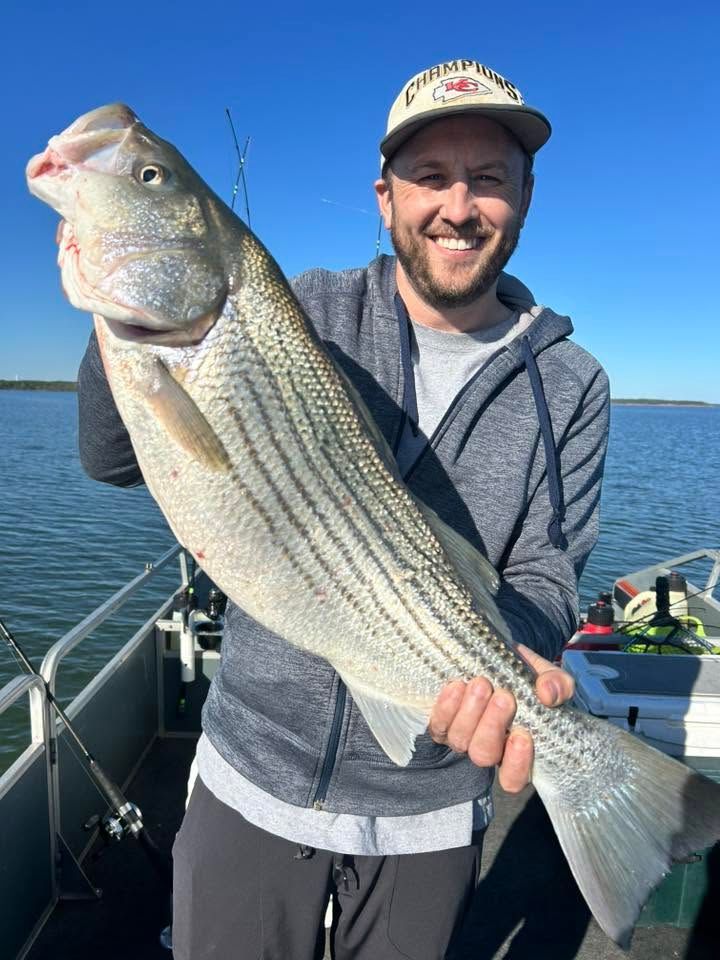
Lake Texoma holds one of the only self-reproducing landlocked striped bass fisheries in the United States—a biological distinction that shapes how these fish behave and how they have to be pursued. Unlike stocked lake fisheries where stripers concentrate near shoreline structures and respond predictably, Texoma stripers behave more like their coastal relatives: they school around moving bait, suspend in open water, and shift dramatically with thermocline depth as water temperatures change through the season. Playin-Hooky guides striper fishing trips out of Kingston specifically built around understanding those movement patterns.
Striper fishing on Lake Texoma requires reading sonar returns accurately enough to distinguish bait schools from fish, then positioning and presenting a lure or live bait at the precise depth where feeding is occurring. Both artificial lure options—including umbrella rigs and paddletail swimbaits worked at depth—and live bait presentations using shad-style rigs are available depending on fish activity. Experience level doesn't determine who can fish a striper charter; the guide handles the technical read so clients focus on the retrieve and the fight.
Arrange a striper trip by calling (417) 973-5314 to discuss current lake conditions and available booking dates..
Why Striper Behavior Demands Specific Methods
Targeting stripers effectively involves understanding two separate phases in a single day: the early morning topwater window when fish push shad to the surface in open water, and the mid-morning transition when fish drop to thermocline depth and require vertical or deep-running presentations. Missing that transition point—or continuing to fish the surface after fish have moved down—accounts for most unproductive hours on the lake. The guide tracks that shift through sonar and surface activity and adjusts the approach in real time.
A productive striper session looks noticeably different from a slow one: multiple hook-ups during active feeding windows, fish in the 5- to 20-pound class that test tackle and technique, and the distinct experience of watching a topwater blowup when conditions align. Playin-Hooky structures trips to maximize time during the highest-activity windows based on season, current conditions, and the way the fish have been moving in recent days.
Trips are available for different experience levels, and the approach adjusts accordingly—novice anglers get hands-on instruction for hooksets and fighting larger fish, while experienced anglers can focus on technique refinement and reading the water themselves. What stays consistent is the focus on putting clients on actively feeding stripers rather than prospecting unfamiliar water..
What Striper Anglers Usually Ask First
Striper fishing on Lake Texoma draws questions specific to this fishery—the fish behave differently than bass or catfish, and the tactics reflect that.
What size stripers can I expect to catch on Lake Texoma?
Lake Texoma stripers commonly run between 5 and 20 pounds, with larger fish possible during certain seasonal patterns—the lake's self-sustaining population produces fish across a wide size range throughout the year.
How does water temperature affect striper location on the lake?
As surface temperatures climb above roughly 75 degrees, stripers push deep to stay near their preferred thermal layer, which means presentations shift from topwater to vertical jigging or deep live-bait rigs suspended at thermocline depth.
Why does the guide choose umbrella rigs over single-hook lures in certain conditions?
Umbrella rigs mimic a bait school rather than a single prey item, which triggers reaction strikes from stripers keyed in on shad concentrations—single lures outperform when fish are selectively feeding on specific baitfish sizes.
When during the day is striper action most consistent near Kingston?
Early morning—typically the first two to three hours after sunrise—produces the most reliable topwater and near-surface activity before light intensity and warming water push fish deeper.
How should I prepare physically for a striper charter?
Stripers fight hard for their size and make multiple runs, so anglers should be prepared to hold a rod under tension for extended periods—the guide can adjust drag settings and assist with technique to reduce fatigue during longer fights.
Playin-Hooky books striper fishing trips on Lake Texoma for anglers at every level, from first-timers to those returning to refine a specific technique. Call (417) 973-5314 to review current conditions and lock in a date that works for your schedule.