
Targeting Larger Fish Demands Specific Adjustments
Trophy Fishing in Kingston for anglers specifically pursuing oversized catches on Lake Texoma rather than general numbers-based days
Most guided fishing trips optimize for activity—consistent hookups, fish in the boat, steady action throughout the day. Trophy-focused trips operate on a different logic entirely. Catching fish at the upper end of Lake Texoma's size range means accepting fewer strikes in exchange for deliberately targeting the conditions, locations, and presentation sizes that larger, more cautious fish respond to. Playin-Hooky builds trophy fishing charters out of Kingston around that distinction, structuring each trip around the specific decisions that shift odds toward oversized fish rather than average catches.
Trophy-class stripers and other large predators on Lake Texoma behave differently than school-sized fish. They tend to hold on specific structural edges—deep creek channel confluences, main lake points with adjacent open water, submerged timber lines near active current—rather than roaming mid-water columns with feeding schools. Presentation size matters significantly: larger artificial lures and full-sized live bait rigs are more likely to draw strikes from fish that have grown conditioned to ignoring smaller offerings. The guide selects between artificial lure and live bait approaches based on how fish are positioned and how aggressively they're feeding that day.
Talk through your trophy fishing goals by calling (417) 973-5314 before booking so the trip can be structured around the right conditions and timing..
What Proper Trophy Fishing Requires
A trophy-focused session involves heavier tackle than a standard striper day—stronger line, larger hooks, and rods rated for the sustained pressure of fighting a fish that may run 20 pounds or more before it tires. The guide evaluates sonar returns differently on a trophy trip, looking specifically for isolated large marks holding near structure rather than the dense, mid-column school signatures that indicate smaller, actively feeding groups. That distinction in reading the water is what separates a trophy-focused approach from a general guided day.
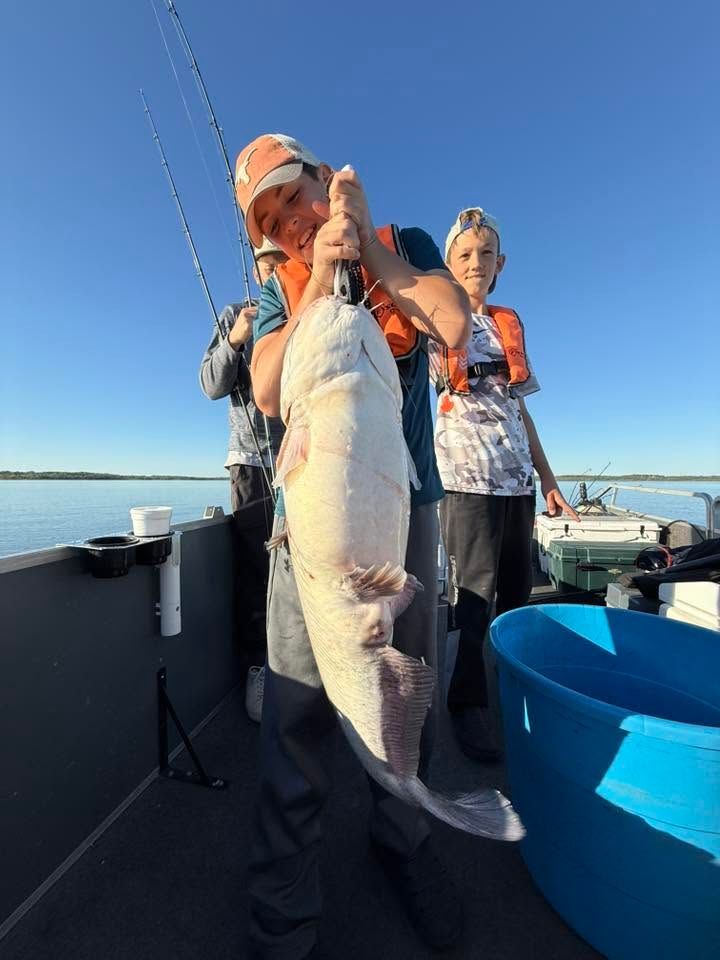
When a trophy-class fish is landed, the difference is immediately visible and physical—these are fish that require two hands, test the rod's backbone, and make multiple long runs before coming to the net. Playin-Hooky customizes trip duration and target areas based on recent reports and seasonal fish behavior, because trophy-sized fish don't hold in the same locations year-round and the approach shifts accordingly.
Trophy trips are available in both customizable formats and standard daily structures depending on how specific your target goals are. Anglers who want to pursue a particular species at maximum size, versus those open to whatever the lake's largest predators happen to be, will fish different water and use different presentations—both options are workable and the guide adjusts the plan accordingly..
Questions Before Booking a Trophy Trip
Trophy fishing trips on Lake Texoma draw specific questions about preparation, expectations, and what separates this type of charter from a standard guided day.
What qualifies as a trophy-class fish on Lake Texoma?
While trophy thresholds vary by angler, stripers exceeding 20 pounds are generally considered trophy targets on Texoma—the lake's self-sustaining population produces fish in this range regularly, with exceptional specimens reaching into the 30-pound class.
How does tackle differ on a trophy-focused trip compared to a standard charter?
Heavier braided line, larger-profile lures, and rods with stronger backbone ratings are standard on trophy days because larger fish apply sustained pressure that lighter gear isn't built to handle reliably.
Why do larger fish hold in different locations than school-sized stripers?
Trophy-class fish often separate from active feeding schools and position near structural transitions—deep points, channel edges, or submerged timber—where they can ambush prey without competing with smaller fish for position.
When during the year do the largest stripers concentrate near Kingston?
Late fall and early winter tend to produce the most consistent opportunities for larger fish as cooling water temperatures concentrate baitfish and push trophy stripers into more predictable feeding patterns near accessible structure.
What should I expect in terms of strike frequency on a trophy-focused day?
Trophy trips typically produce fewer total strikes than a numbers-focused charter—the trade-off is that the presentations and locations are specifically selected for size rather than volume, which requires patience but targets fish well above the lake's average.
Playin-Hooky plans trophy fishing trips around current lake conditions and the specific size goals each angler brings to the trip. Call (417) 973-5314 to discuss what you're targeting and find a date when conditions favor a serious shot at a fish worth remembering.